
There are many companies (such as Hak5) manufacturing hacking products that are easily available on the market, however, their ethics are widely debated. Some people believe that hacking can be used for good, while others believe that it is always unethical.
Hacking products can be used to find security vulnerabilities in systems and help to protect against attacks. However, they can also be used to gain unauthorized access to systems and steal data.
Most hacking products are designed to be used by experienced professionals. However, there are also some products that are designed for amateur hackers. These products can be used for both good and bad purposes.
Here’s a brief introduction of what Hak5 really is and their special product lineup:
Hak5 — An Introduction
Hak5 provides a platform for the latest in offensive technology, making it the perfect place to start your hacking career. With their unique approach to show-and-tell style demonstrations, Hak5 is the perfect place to learn about the latest in hacking techniques.
Whether you’re a beginner or a seasoned professional, Hak5 has something for everyone. From their world-famous Wi-Fi Pineapple to the USB Rubber Ducky, Hak5 has the tools you need to get the job done. And with their comprehensive line of video tutorials, you can be sure you’re getting the best possible instruction.

1. WiFi Pineapple
The WiFi Pineapple is a wireless auditing tool created by Hak5. It is a portable device that can be used to perform man-in-the-middle attacks on wireless networks. The Pineapple can be used to intercept and redirect traffic, perform denial-of-service attacks, and sniff data. It can also be used to create fake wireless access points and honeypots.
It is easy to use and can be configured to work with a variety of wireless networks. It is a powerful tool that can be used to exploit vulnerabilities in wireless networks and perform various attacks.
The WiFi Pineapple comes with a number of features and capabilities that make it a very powerful tool.
MITM Attacks: One of the most notable features is the ability to perform man in the middle attacks. This type of attack allows the attacker to intercept and view all of the traffic passing between two devices. This can be used to steal sensitive information or to redirect traffic to a malicious website.
DNS Spoofing: Another powerful feature of the WiFi Pineapple is DNS spoofing. This allows the attacker to redirect users to a different website than the one they intended to visit. This can be used to phish for sensitive information or to redirect users to a malicious website.
Web Page Redirects: Web page redirects is another feature that can be used to redirect users to a different website. This can be used for a variety of purposes, including phishing or redirecting users to a malicious website.
Packet Sniffing: Packet sniffing is another powerful feature of the WiFi Pineapple. This allows the attacker to intercept and view all of the traffic passing through the network. This can be used to steal sensitive information or to monitor traffic for signs of malicious activity.
ARP Poisoning: ARP poisoning is another powerful feature of the WiFi Pineapple. This allows the attacker to redirect traffic to a different device on the network. This can be used to sniff traffic or to redirect users to a malicious website.

2. USB Rubber Ducky
The USB Rubber Ducky is a keystroke injection tool that allows an attacker to send keystrokes to a computer very quickly. This can be used to automate tasks or to gain access to a system.
The Rubber Ducky looks like a regular USB flash drive, but it can be used to automate various tasks on a computer, such as opening a program or opening a website. The USB Rubber Ducky can also be used to bypass security measures, such as password prompts.
It can be used to automate tasks by creating a script that will be run when the device is plugged in. This can be used to automate tasks that would normally be done manually, such as opening a web browser and going to a specific website.
It is also capable of gaining access to a system. This can be done by creating a script that will exploit a vulnerability on the system. This can be used to gain access to a system that would normally be inaccessible.

3. Bash Bunny
The Bash Bunny is a USB device created by Hak5 that allows for easy exploitation of systems. It can be used to inject payloads, execute commands, and transfer files, making it a powerful tool for anyone looking to gain access to a system. The Bash Bunny is easy to use and can be a powerful asset in any hacker’s toolkit.
It can be plugged into a system and will automatically detect the operating system. Once it has detected the operating system, it will then inject a payload that will allow for remote access to the system. The Bash Bunny can also be used to execute commands on the system, making it a powerful tool for anyone looking to gain access to a system. The Bash Bunny is easy to use and can be a powerful asset in any hacker’s toolkit.
Hak5 offers two versions of Bash Bunny, one is a base variant while the other one comes with an addition of Bluetooth:
- Bash Bunny Mark I
- Bash Bunny Mark II

4. Shark Jack
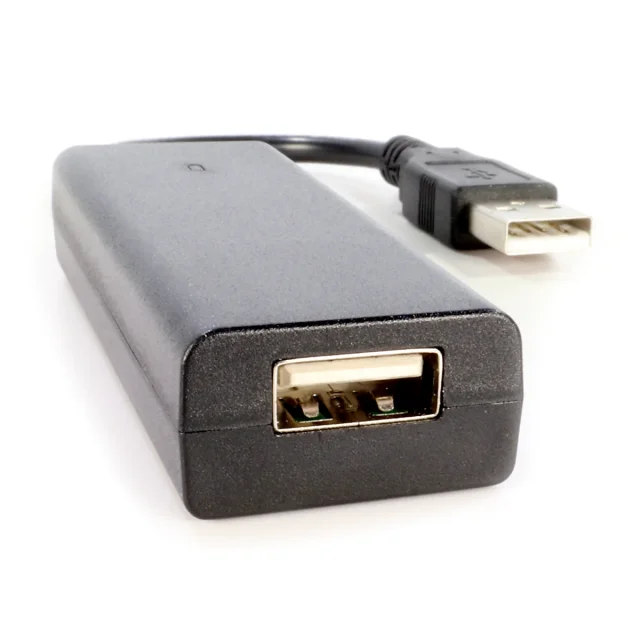
Shark Jack is a pocket-sized network attack tool designed for quick network assessments. It is ideal for pentesters and network administrators needing to evaluate network security swiftly. Contrary to previous descriptions, Shark Jack does not have a built-in WiFi adapter and is not directly used for wireless pentesting. Instead, its strengths lie in its ease of use for conducting network reconnaissance and exploitation in wired networks. With a simple flip-of-the-switch operation and multi-color LEDs for instant feedback, Shark Jack facilitates quick, targeted network assessments.
5. Key Croc
Key Croc is a sophisticated keylogging device designed to monitor and record keystrokes on a computer. It’s a powerful tool for security professionals and pentesters to understand how users interact with systems and to test security measures. To access the data recorded by Key Croc, users typically connect to it using SSH, mount it as a drive, or utilize serial communication, not through specific “Key Croc software.” The term “network hijacking” previously mentioned may have been misleading; Key Croc’s primary function is to capture keystrokes, which can aid in various security assessments, including identifying and exploiting system vulnerabilities based on user input patterns. Its capabilities include keystroke injection and being Wi-Fi enabled, which allows for sophisticated payload deployment and remote operations.

6. Screen Crab
The Screen Crab is a device designed to capture and stream video from HDMI sources in a discreet manner. It is not capable of controlling another computer. Instead, it acts as an inline HDMI capture tool, allowing users to monitor and record video streams from computers, smart projectors, and other HDMI-capable devices. This makes Screen Crab an invaluable tool for security assessments, training, and monitoring, providing a stealthy way to observe on-screen activities without interference.

7. LAN Turtle
The LAN Turtle is a compact, USB-powered tool designed for stealthy network surveillance and penetration testing. While it has been mentioned as a device capable of password cracking, it’s important to note that due to its low-power nature, the LAN Turtle is not ideally suited for direct password cracking tasks. Instead, it excels at network reconnaissance, man-in-the-middle attacks, and can facilitate the exfiltration of password hashes for cracking on more powerful systems. The LAN Turtle’s primary design is geared towards providing remote access, intelligence gathering, and network monitoring in a discreet manner, making it a valuable tool for security professionals looking to assess and enhance network defenses.
Is it Ethical to use Hacking Devices?
It depends on the situation and the motivations of the person using the hacking devices.
If the person is using the devices to gain unauthorized access to sensitive information, then it is clearly unethical. However, if the person is using the devices to test the security of a system or to find vulnerabilities that can be fixed, then it is arguable whether it is ethical.
Ultimately, it comes down to a question of intent. If the person using the hacking devices has good intentions and has permission from their supposed victim or organization, then it is more likely to be ethical. However, if the person is using the devices for malicious purposes, then it is clearly unethical.
Unethical Hacking: Repercussions
Hackers can face a number of repercussions for the unethical use of hacking devices and cybercrime laws. These consequences can range from a slap on the wrist to a prison sentence, depending on the severity of the offense.
For example, a hacker who is caught violating cybercrime laws may be fined, placed on probation, or even imprisoned. In some cases, a hacker may have his or her computer equipment seized by authorities. Moreover, a hacker who is found guilty of cybercrime may be required to pay restitution to the victims of his or her crimes.
In most serious cases, hackers can be sentenced to life in prison. For example, a hacker who is convicted of cyberterrorism or of hacking into critical infrastructure could be given a life sentence.
In conclusion, hackers can face a variety of consequences for the unethical use of hacking devices and cybercrime laws. These consequences can range from a slap on the wrist to a life in prison, depending on the severity of the offense.
Bottom Line
Hak5’s devices offer valuable tools for those interested in security, penetration testing, and ethical hacking. They are designed with the professional and enthusiast in mind, providing a range of capabilities from network assessment to keystroke logging. While powerful, it’s crucial to use these tools responsibly and ethically, with a clear understanding of their functionalities and limitations. Always ensure your activities are authorized and aim to improve cybersecurity and awareness.


