
Building a modern SOC: people, process and technology
What a modern security operations centre is built on: the people who investigate and respond, the processes that make the outcome repeatable, and the cloud-native technology that brings every signal into one place.
Transcript
0:00The world moved
The traditional SOC was built for on-premises servers, local logs and manual triage. Attacks now span cloud services, identities, endpoints and third-party connections.
0:12Three pillars
A modern SOC stands on three pillars: people, process and technology. Take one away, and the other two cannot carry the weight.
0:22People
People remain the core: analysts and threat hunters who investigate, incident responders who contain and recover, and intelligence teams who track new campaigns.
0:34Automation
Automation and AI take on the enrichment and triage, so those people spend their time on the investigations that need human judgement.
0:44Process
Process makes it repeatable: playbooks for each kind of incident, threat models mapped to MITRE ATT&CK, and every alert feeding back into better detection.
0:54Technology
Technology is the foundation: cloud-native telemetry from identity, endpoint, email and SaaS, correlated in one place instead of scattered across consoles.
1:06The shift
The shift is from fragmented visibility and ticket queues to one view of the estate and automated containment, with no hardware to run.
1:16Book a Demo
Wizard Cyber runs its SOC on Microsoft Sentinel, Defender and Entra ID, with AI-powered triage and analysts around the clock. Book a demo.
Detection & Response
 1:32
Detection & Response
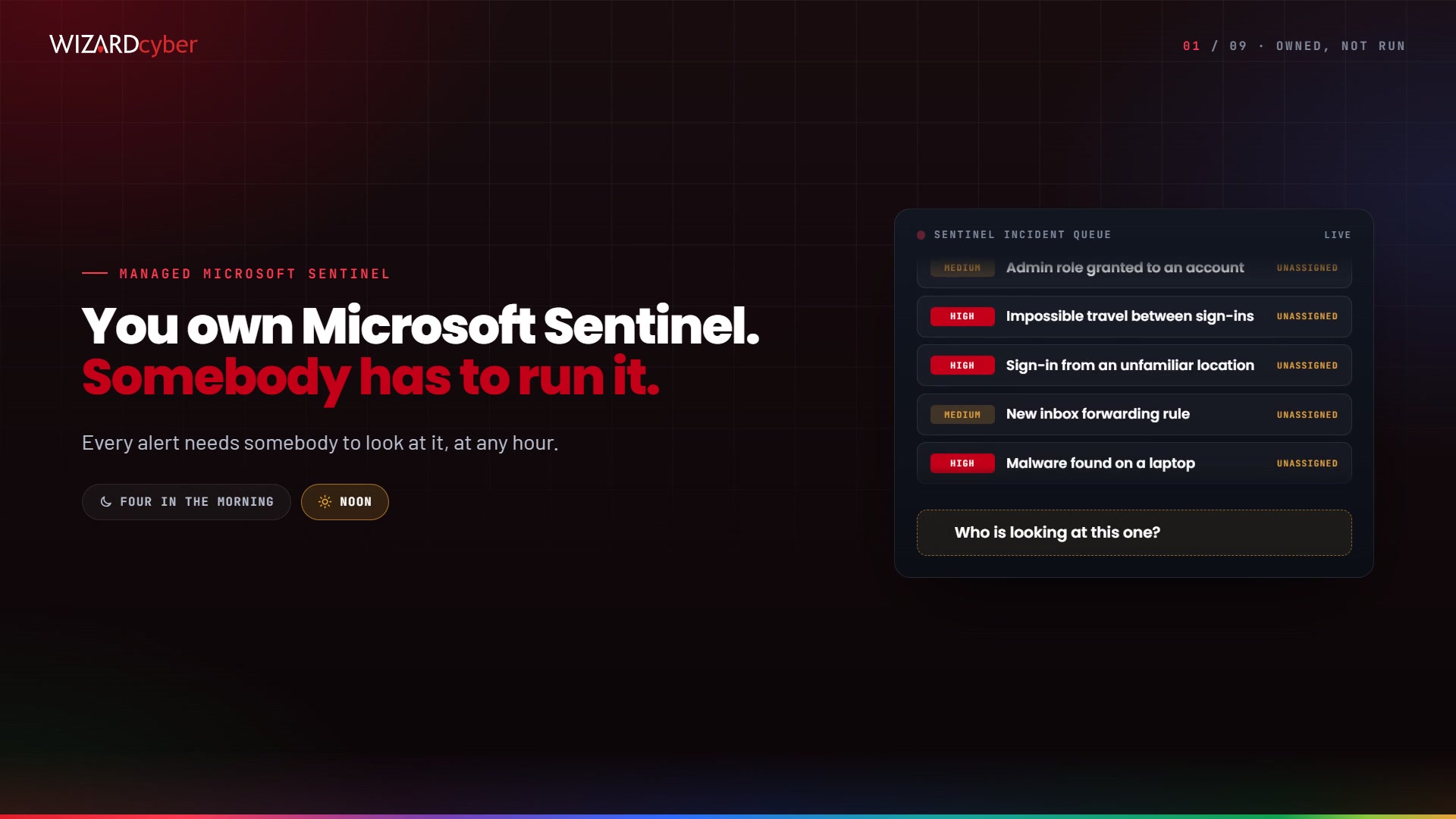
Managed Microsoft Sentinel
How Wizard Cyber runs Microsoft Sentinel as a service inside your own tenant: AI agents investigate every alert to a verdict, and a senior analyst signs it off.
 1:18
Detection & Response
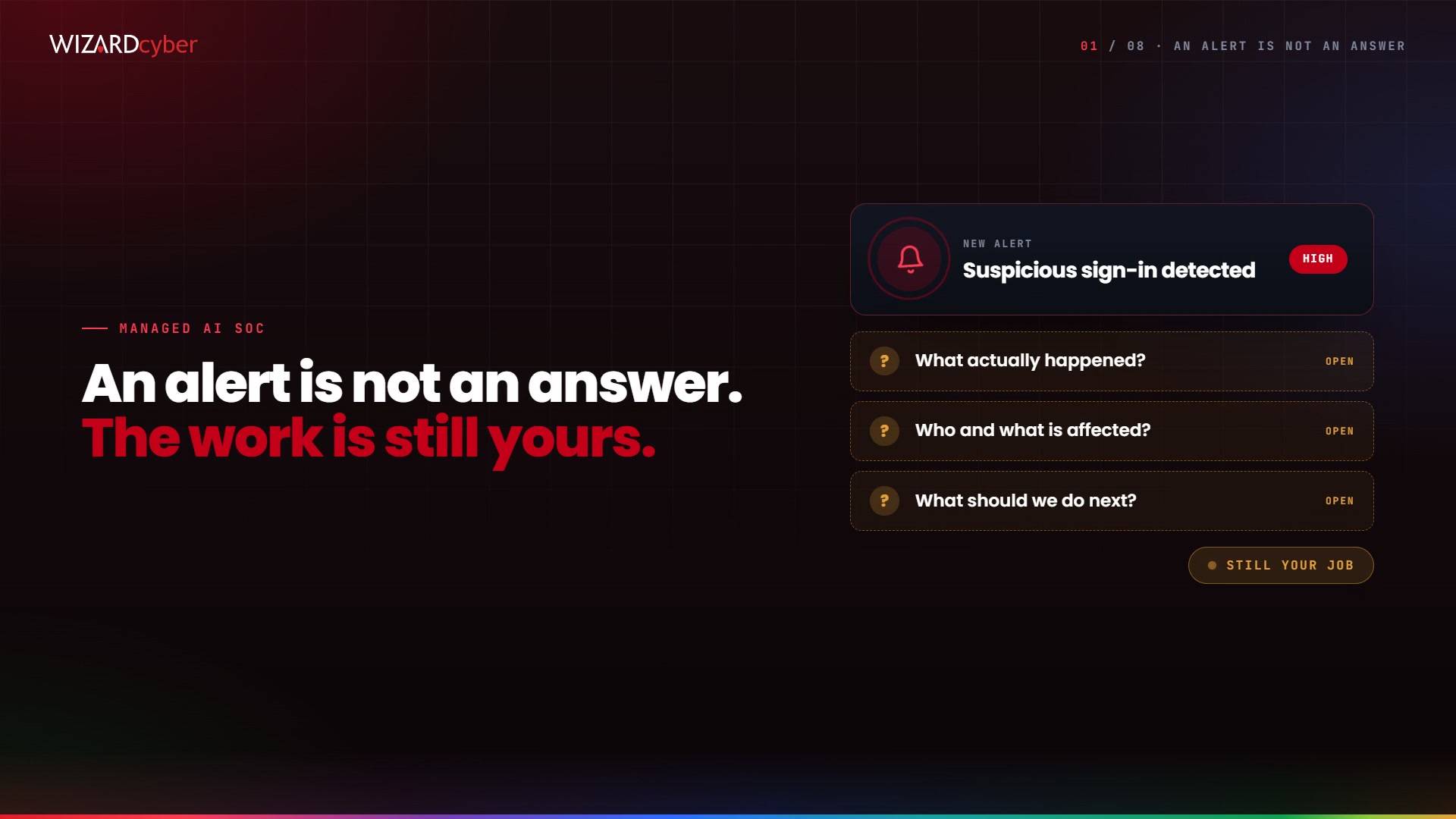
Managed AI SOC
What Wizard Cyber’s Managed AI SOC gives you on every incident: a finished case from specialised AI agents on CYBERSHIELD AI, signed off by a senior analyst, in the Core, Complete or Command package.
 1:21
Detection & Response
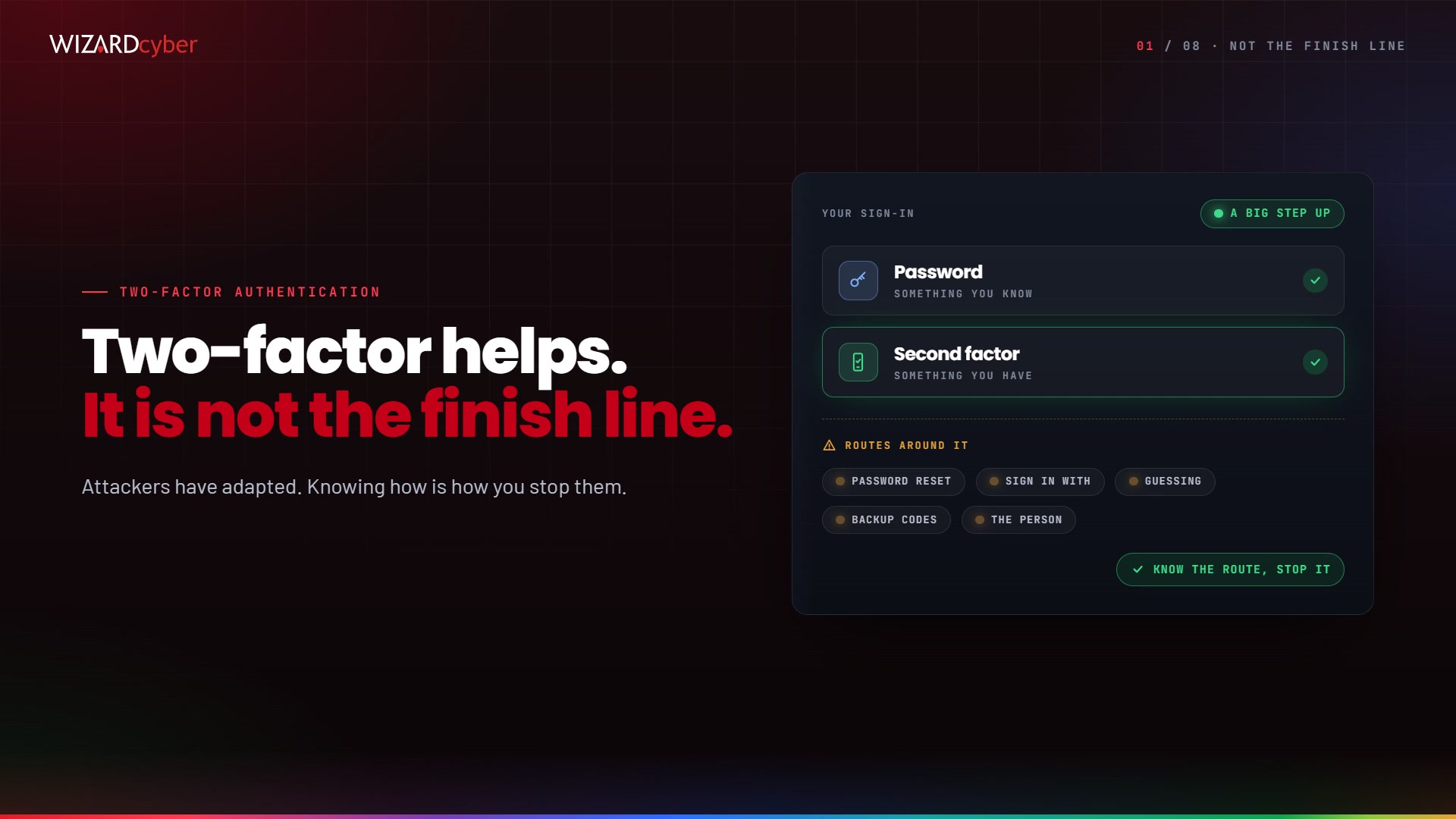
Bypassing MFA
Two-factor authentication is a big step up from a password alone, but attackers have adapted. The routes they use around it, the warning signs to watch for, and the factors that cannot be relayed.
Watch it run
on your own alert types.
An hour with a SOC analyst: a live investigation from signal to signed verdict, and the autonomy dial set where you would set it. Your scenarios, not a canned demo.