
Zero-click attacks: how they work and what stops them
Zero-click attacks need nothing from their victim. How automatic processing and trusted channels let them in, who they target, and the controls that break the automatic step.
Transcript
0:00Nothing from the victim
A zero-click attack needs nothing from its victim. No link clicked, no attachment opened. The device does the work on its own.
0:09Automatic processing
Phones and apps handle content automatically: messages, media and previews are processed before anyone looks. Each of those steps is something an attacker can aim at.
0:21Trusted channels
So attackers favour trusted delivery surfaces, like messaging apps and group chats, because they carry implied trust and sidestep the defences built for email.
0:33One example
In one disclosed case, a WhatsApp group could deliver a file to an Android phone automatically. The risk was in what processed the file next.
0:43Who they target
These attacks are usually targeted rather than mass. Not a threat to your whole workforce, but a real one to your executives, your finance team and anyone with privileged access.
0:55What stops them
What stops them: turn off automatic downloads where you can, switch on the enhanced protections for high-risk users, and keep apps and operating systems patched.
1:06What you can see
Phones mostly sit outside what a SOC can see. Mobile device management and mobile threat defence close part of that gap, and show the signs of compromise afterwards.
1:18Book a Demo
Those phones hold corporate mail, sign-in prompts and session tokens. Bring them into view. Book a demo.
Detection & Response
 1:32
Detection & Response
Managed Microsoft Sentinel
How Wizard Cyber runs Microsoft Sentinel as a service inside your own tenant: AI agents investigate every alert to a verdict, and a senior analyst signs it off.
 1:18
Detection & Response
Managed AI SOC
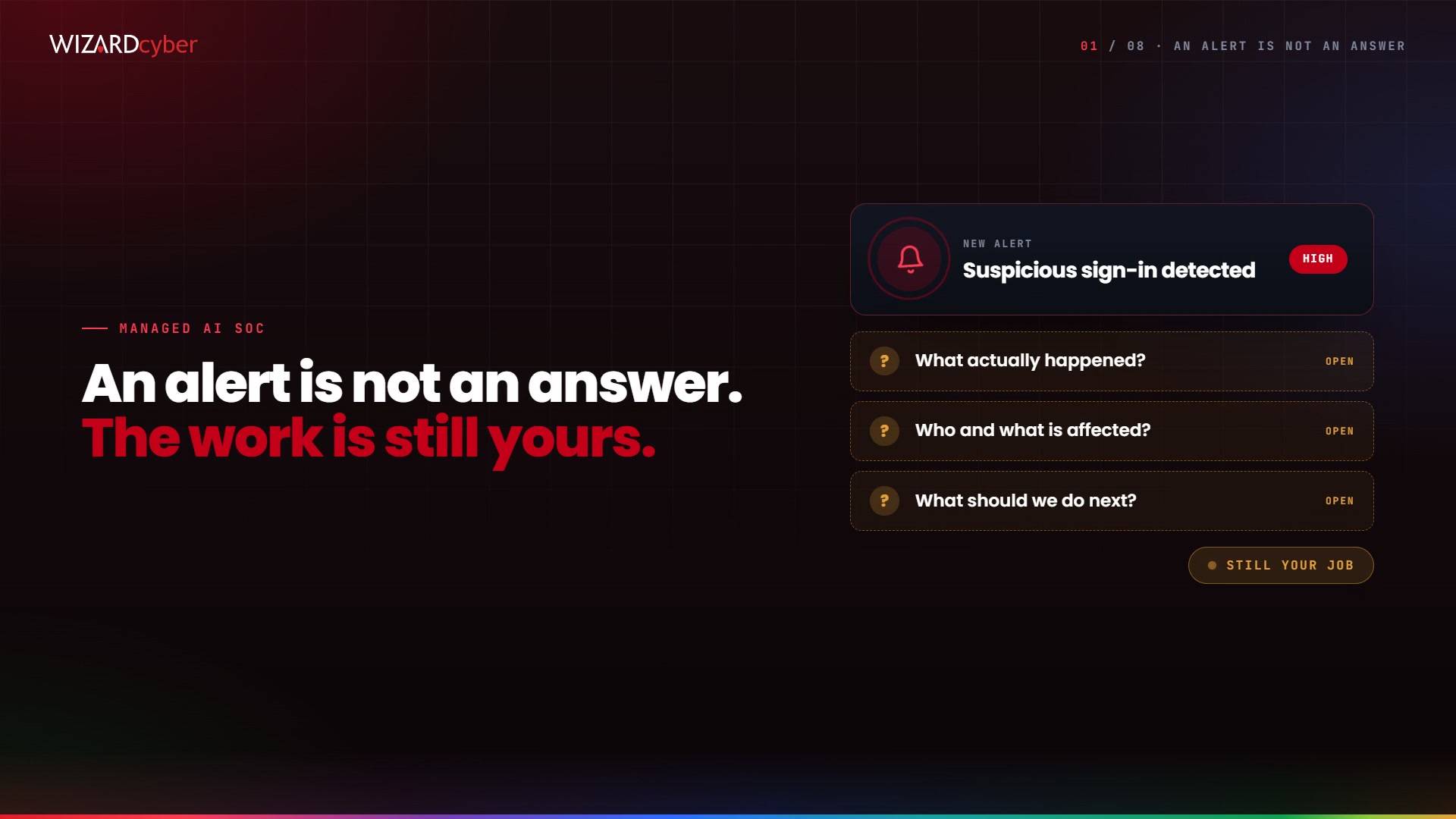
What Wizard Cyber’s Managed AI SOC gives you on every incident: a finished case from specialised AI agents on CYBERSHIELD AI, signed off by a senior analyst, in the Core, Complete or Command package.
 1:21
Detection & Response
Bypassing MFA
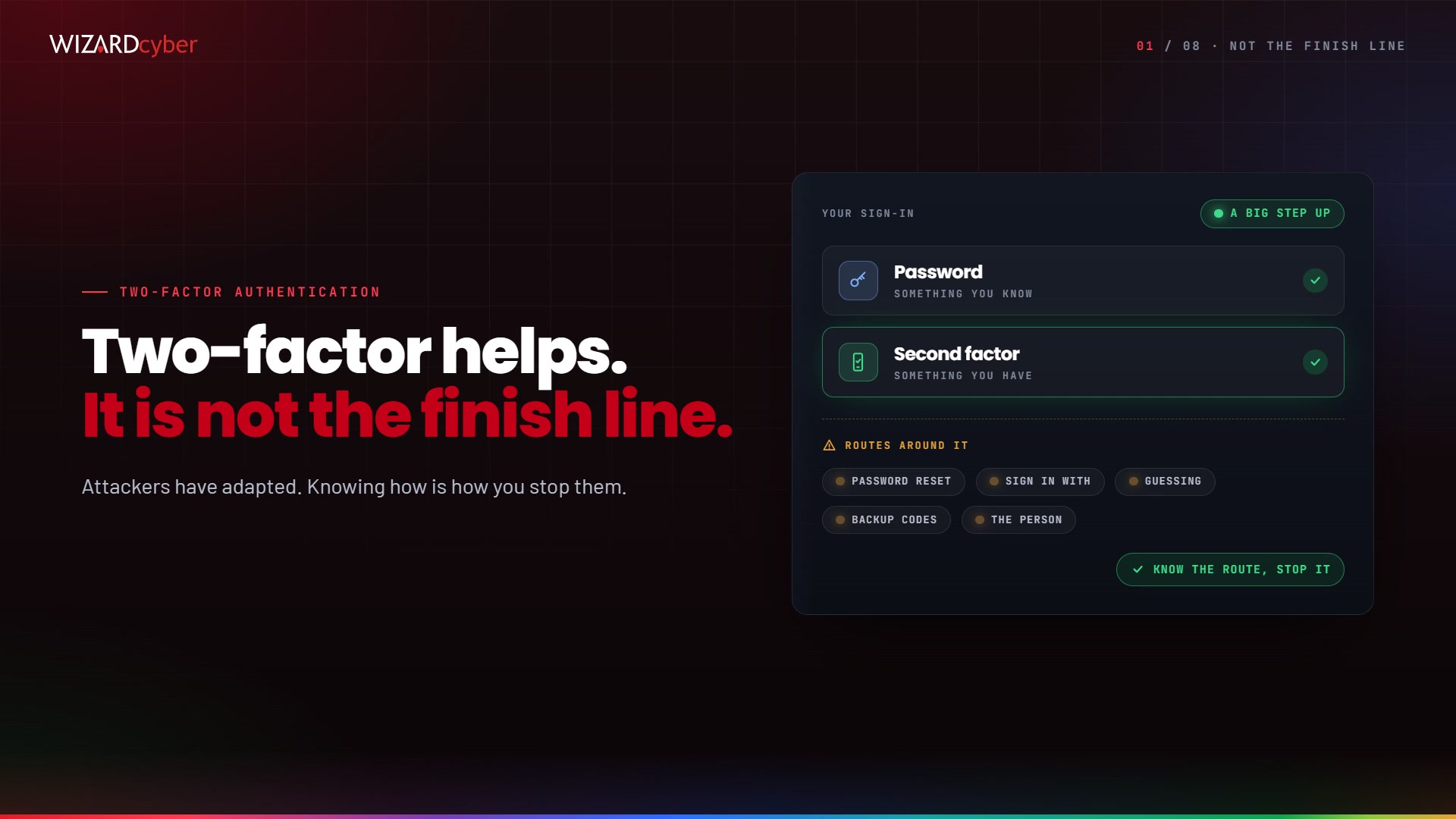
Two-factor authentication is a big step up from a password alone, but attackers have adapted. The routes they use around it, the warning signs to watch for, and the factors that cannot be relayed.
Watch it run
on your own alert types.
An hour with a SOC analyst: a live investigation from signal to signed verdict, and the autonomy dial set where you would set it. Your scenarios, not a canned demo.